The Authenticity Scam: Why 'Real' Influencers Are the Biggest Liars
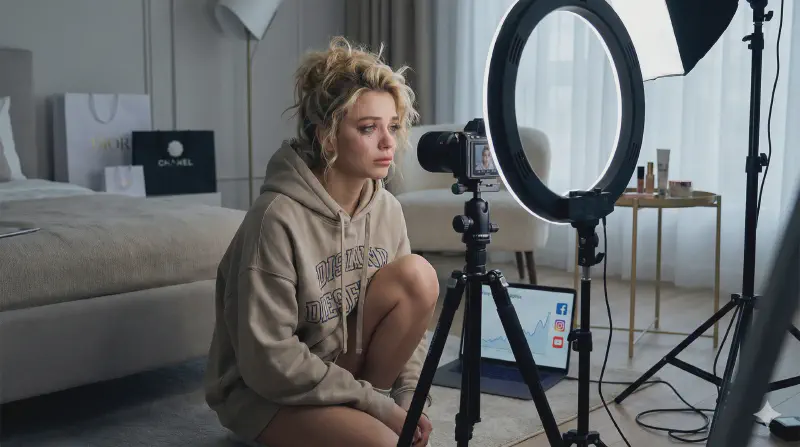
The video starts with a shaky camera. No makeup. Hair in a messy bun. Red eyes. She takes a deep breath.
“I need to be real with you guys,” she says, voice cracking. “I’ve been struggling. I haven’t been showing you the real me. I’ve been so focused on perfection that I forgot what matters: connection.”
The comments flood in. “We love you!” “You’re so brave!” “Thank you for being vulnerable!”
Three days later, she’s promoting a $297 “Authentic Living Masterclass” with a limited-time discount code.
Welcome to the Authenticity Industrial Complex, where vulnerability is the product, transparency is the marketing strategy, and “keeping it real” is the most lucrative lie ever sold.
Here’s the uncomfortable truth: The most authentic person in your feed is probably a synthetic AI model. At least she doesn’t pretend to care.
Table of Contents
- The Vulnerability Gold Rush: How Crying Became Content
- The Authenticity Paradox: Performed Realness Is Still Performance
- The “Real” Morning Routine Lie
- Why AI Influencers Are More Honest Than Humans
- The Emotional Labor Scam: Selling Friendship, Delivering Ads
- The Flywheel of Fake Realness
- Case Study: The Apology Video Economy
- The Radical Transparency Proposition
- Conclusion: In a World of Liars, the Robot Is the Most Honest
The Vulnerability Gold Rush: How Crying Became Content
There’s a formula circulating in influencer coaching circles. It’s called “The Vulnerability Hook.”
Here’s how it works:
- Open with emotional distress (crying, shaky voice, “raw” footage)
- Share a “relatable” struggle (burnout, anxiety, imposter syndrome)
- Build parasocial intimacy (“I feel like I can tell you guys anything”)
- Monetize the goodwill (course launch, product placement, affiliate link)
Repeat every 6-8 weeks.
The Data on Vulnerability Marketing
According to a 2024 study by Influencer Marketing Hub, content tagged with #vulnerable or #authentic sees:
- 34% higher engagement than standard promotional posts
- 2.8x more shares than polished content
- 41% higher conversion rates on subsequent product promotions
Translation: Crying sells.
But here’s the thing: If vulnerability is strategic, is it still vulnerable? If authenticity is calculated, is it still authentic?
The Authenticity Paradox: Performed Realness Is Still Performance
Let’s talk about Emma Chamberlain, the patron saint of “relatable” content. She built an empire on being “real”—awkward edits, no makeup, candid moments.
Then she launched a coffee company, got a Cartier deal, and started attending the Met Gala.
Is she still relatable? Or is “relatable” now just another aesthetic?
The Authenticity Arms Race
As everyone races to be “the most authentic,” we’ve created a paradox:
- Tier 1: Polished, aspirational content (the old model)
- Tier 2: “Authentic” content (the current model)
- Tier 3: “I’m calling out performative authenticity” content (the meta-model)
- Tier 4: ???
We’re now in a world where influencers are being authentic about being inauthentic about being authentic. It’s authenticity recursion.
The “Real” Morning Routine Lie
You know the video. It’s titled: “My ACTUAL Morning Routine (no filter, no BS)”
The thumbnail: Her, looking effortlessly beautiful in “natural light,” holding a latte with perfect foam art.
The reality:
- 5 AM wake-up (but she went to bed at 11 PM because she was editing content)
- Meditation and journaling (filmed with three camera angles and a ring light)
- Green smoothie (sponsored by AG1, affiliate link in bio)
- Skincare routine (14 products, all linked, total retail value: $847)
At no point does she mention:
- The assistant who set up the cameras
- The Ring Light Glamour Glow™ that makes “no filter” look flawless
- The 47 takes it took to get the “candid” laugh
The Illusion of Access
“Real” morning routines are the new aspirational content. They’re not showing you their lives; they’re showing you a product demo disguised as authenticity.
Why AI Influencers Are More Honest Than Humans
Here’s where it gets wild: Aitana Lopez has never lied to you.
She’s never:
- Pretended to struggle with anxiety to sell you a therapy app
- Staged a “candid” breakup to boost engagement
- Claimed a product changed her life when she’s never used it
Why? Because she can’t. She’s code. She’s transparent about being synthetic. Her bio literally says “AI Model.”
The Honesty Hierarchy
Let’s rank influencers by transparency:
- AI Influencers (Aitana Lopez, Lil Miquela): 100% transparent. You know it’s fake. No pretense.
- Corporate Brand Accounts: 90% transparent. You know it’s marketing.
- Traditional Celebrities: 60% transparent. You know they’re selling something, but they don’t pretend to be your friend.
- “Authentic” Influencers: 20% transparent. They’re selling harder than anyone, but they disguise it as friendship.
The irony? The robot is the most honest person in the room.
The Emotional Labor Scam: Selling Friendship, Delivering Ads
Let’s talk about the “Good Morning” text strategy.
Some influencers send daily “check-in” messages via email or Discord. It feels personal. It feels like they care.
Until you realize:
- It’s automated (scheduled via ConvertKit or Mailchimp)
- It’s A/B tested (“Good morning bestie” vs. “Hey love” to see which converts better)
- It’s a funnel (Day 7: soft sell, Day 14: hard sell, Day 21: urgency discount)
The Friendship-as-a-Funnel Model
This isn’t friendship. It’s emotional arbitrage. They’re investing emotional currency (vulnerability, “realness”) to extract financial currency (your money).
The Flywheel of Fake Realness
How does this cycle sustain itself?
Step 1: The Aspirational Phase
- Influencer posts polished content
- Audience engagement plateaus
- Algorithm punishes low engagement
Step 2: The Authenticity Pivot
- Influencer posts “vulnerable” content
- Audience responds with renewed engagement
- Goodwill is banked
Step 3: The Monetization
- Influencer leverages goodwill to sell product/course/membership
- Some audience members feel betrayed, but most buy
Step 4: The Burnout Post
- Influencer posts about “needing a break” or “staying offline”
- Audience sympathizes
- Returns to Step 1 with renewed authenticity credentials
Rinse. Repeat. Profit.
Case Study: The Apology Video Economy
We’ve created an entire sub-genre of content around apologies. The format is so predictable it’s been memed into oblivion:
- Sitting on the floor (for humility)
- No makeup (for vulnerability)
- Sighing heavily (for emotional weight)
- “I’ve been doing a lot of reflecting…”
The Apology Industrial Complex
Here’s the economics:
- Average views on controversy: 500K–2M (depending on scandal severity)
- Average views on apology video: 1M–5M (higher than regular content)
- Monetization: Ad revenue + sympathy-driven brand deals post-“redemption”
Some influencers have accidentally discovered that getting cancelled is more profitable than staying clean.
The Radical Transparency Proposition
So what’s the alternative?
Option 1: Actual Transparency (Rare)
Some creators are experimenting with full disclosure:
- “This is sponsored, here’s how much I was paid”
- “I’m launching a product, here’s my profit margin”
- “This video is designed to convert you, here’s the funnel”
It’s rare, but it works. Audiences respect it.
Option 2: The AI Model (Emerging)
Platforms like TrueCrush are betting on a different model: No pretense of humanity.
When you create or interact with a digital influencer:
- You know it’s AI
- You’re not being sold a fake friendship
- The transaction is clear: You’re creating content, building a brand, or exploring creativity
The honesty is in the absence of deception.
Option 3: The Hybrid Model (The Future?)
What if influencers:
- Used AI for generic brand content (product placement, ads)
- Reserved human content for genuine personal sharing
- Clearly labeled which is which
This would let audiences choose their level of engagement.
Conclusion: In a World of Liars, the Robot Is the Most Honest
We’ve reached a point where the fake person is more trustworthy than the real person.
Aitana Lopez will never:
- Cry to manipulate you
- Pretend a product changed her life
- Sell you a $300 course while claiming she “just wants to help”
She’s pixels and code. She exists to sell things. And she’s honest about it.
Meanwhile, the “authentic” influencer in your feed is running a 14-step emotional funnel designed to extract maximum revenue while making you feel like you’re part of their journey.
The Real Question
Who’s lying more?
- The AI model who admits she’s not real?
- Or the human influencer who pretends they are?
The future of influence isn’t about human vs. AI. It’s about transparency vs. manipulation.
And right now? The robots are winning the honesty contest.
So the next time someone tells you they’re “keeping it real,” ask yourself: Real for you, or real for their conversion rate?
Because if authenticity is the product, you’re not the customer. You’re the mark.
Sources & Further Reading
Influencer Marketing Hub (2025) - The State of Influencer Marketing Benchmark Report Comprehensive data on the industry’s growth, confirming the shift towards “authenticity” as a key performance metric for brands.
Forbes (2021) - Is Authenticity Dead? Why The “Real” Look is Often Fabricated An industry analysis on how “authenticity” has become a manufactured marketing aesthetic rather than a genuine trait.
The Independent (2019) - Sadfishing: The social media trend threatening mental health A deep dive into the “Sadfishing” phenomenon (crying for clicks) and its impact on young audiences.
Abidin, C. (2018). “Internet Celebrity: Understanding Fame Online.” Emerald Publishing. Foundational academic work on “calibrated amateurism” – the intentional crafting of a “raw” aesthetic to appear relatable.
VICE (2019) - How YouTubers Turned the Apology Video Into a Genre A cultural critique of the “Apology Industrial Complex” and the specific tropes (no makeup, floor sitting) mentioned in your article.
ResearchGate (2023) - Impact of Social Media Influencers on Customer Engagement: A Meta-Analysis Accessible academic paper confirming the correlation between perceived authenticity and commercial conversion rates.
Edelman Trust Barometer (2024) - Global Report The latest data on the collapse of trust in traditional media and advertising, driving consumers toward “relatable” voices.